Tucked within the Namib-Naukluft National Park, Sandwich Harbour is a breathtaking collision of towering sand dunes and tidal wetlands that has drawn explorers, fishermen, and naturalists for centuries. Its layered past — stretching from prehistoric peoples to colonial traders and modern conservationists — makes every visit a journey through time as much as landscape.
Long before European sailors charted the Namib coastline, the lagoon now known as Sandwich Harbour was a vital resource for the San and early Nama peoples of southern Africa. Archaeological evidence suggests human activity along this stretch of the Atlantic coast dates back thousands of years, with shell middens — ancient refuse heaps of shellfish remains — found near the lagoon's edges indicating sustained seasonal use. The site offered fresh water from underground seeps, rich marine protein from the tidal shallows, and shelter from the relentless desert winds, making it a rare oasis in one of the world's most inhospitable environments. It was, in every sense, a place where life could take hold.
The harbour sits approximately 50 kilometres south of Walvis Bay along the Namibian Skeleton Coast, occupying a natural depression where tidal seawater mingles with freshwater springs percolating through the dunes. This unique hydrological condition created a permanent lagoon that remained productive across millennia. By the time Bantu-speaking pastoralists moved southward through the region, the site was already established as a waypoint in the semi-nomadic rhythms of Namib life. Its ability to sustain fish, migratory birds, and even limited freshwater vegetation made it an anomaly — a living, breathing pocket of abundance set against some of the driest terrain on Earth, drawing people back generation after generation.
European awareness of the site grew steadily through the late eighteenth and early nineteenth centuries, as British and American whaling vessels combed the South Atlantic for sperm and southern right whales. The harbour offered a naturally sheltered anchorage where crews could replenish water, salt fish, and carry out minor repairs away from the punishing open ocean. It was these English-speaking mariners who bequeathed the name 'Sandwich Harbour' to the location, with most historians attributing it either to the English town of Sandwich in Kent or, more popularly, to the influence of the Earl of Sandwich — the same nobleman who lent his name to the Sandwich Islands, today's Hawaii — reflecting an era of ambitious British maritime naming conventions.
By the mid-nineteenth century, the harbour had evolved into a modest but commercially significant trading post. Guano harvesting along the Namibian coast was a lucrative industry, and Sandwich Harbour sat within a productive zone. Small trading vessels operated a regular supply run, exchanging provisions for dried fish and seal products with the handful of semi-permanent fishermen who had established camps along the shoreline. German colonial authorities, who claimed South West Africa in 1884, took an interest in the site as a potential secondary port to supplement Lüderitz and Swakopmund, though the rapid silting of the lagoon entrance and the shifting dune fields ultimately made large-scale harbour development commercially unviable.
The early twentieth century brought a brief flurry of renewed interest when diamond prospectors swept across the Namib following the famous 1908 discovery near Lüderitz. Speculators combed the coastline southward, and Sandwich Harbour was surveyed for mineral potential. While no commercially significant diamond deposits were found at the harbour itself, the broader Sperrgebiet — the restricted diamond area declared by German colonial authorities — drew a hard boundary that effectively sealed off public access to large swaths of the southern Namib coast. This enforced isolation, ironically, became one of the greatest gifts to Sandwich Harbour's long-term ecological integrity, shielding it from the kind of industrial exploitation that scarred other parts of the coastline.
The transformation of Sandwich Harbour into a protected conservation area unfolded gradually across the twentieth century. South African administration of South West Africa — which followed the collapse of German colonial rule after World War One — maintained tight restrictions on coastal access primarily for diamond security reasons. This de facto protection kept the lagoon's ecosystem relatively undisturbed. In 1966, the Namib Desert Park was formally gazetted, and subsequent expansions eventually consolidated the harbour within the vast Namib-Naukluft National Park, today one of the largest conservation areas in Africa at approximately 49,768 square kilometres, providing a legislative framework for the habitat's long-term survival.
Namibian independence in 1990 ushered in a new era for Sandwich Harbour. The newly formed Ministry of Environment and Tourism recognised the lagoon's extraordinary ecological and scenic value and moved to formalise access while balancing conservation imperatives. The site was designated a wetland of international importance under the Ramsar Convention, acknowledging its role as a critical feeding and breeding ground for hundreds of thousands of migratory and resident waterbirds, including flamingos, pelicans, cormorants, and numerous wader species. This international recognition elevated Sandwich Harbour from a regional curiosity to a globally significant natural asset, attracting ornithologists, photographers, and ecotourists from around the world.
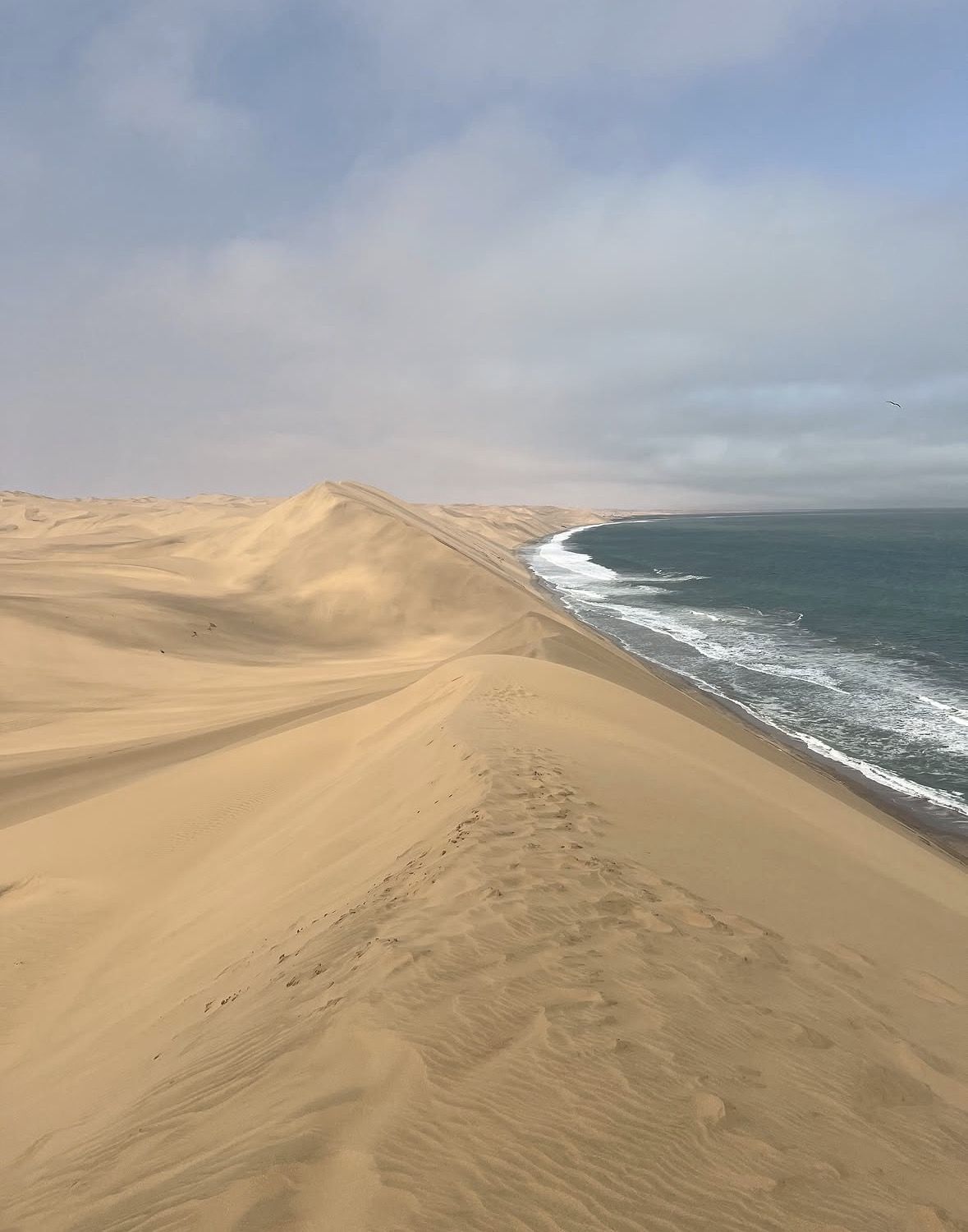
The development of licensed tour operators running guided 4x4 excursions from Walvis Bay became the cornerstone of Sandwich Harbour's sustainable tourism model through the late 1990s and 2000s. Because the only land access route runs directly along the beach — a tidal track that disappears entirely at high tide — visitors must join organised tours in high-clearance 4WD vehicles. This natural logistical constraint acts as an automatic visitor-management mechanism, preventing mass tourism and preserving the raw, elemental atmosphere that makes the harbour so compelling. Operators typically time departures to coincide with low tide, threading through the surf line beneath dunes that rise dramatically to over 100 metres directly from the waterline.
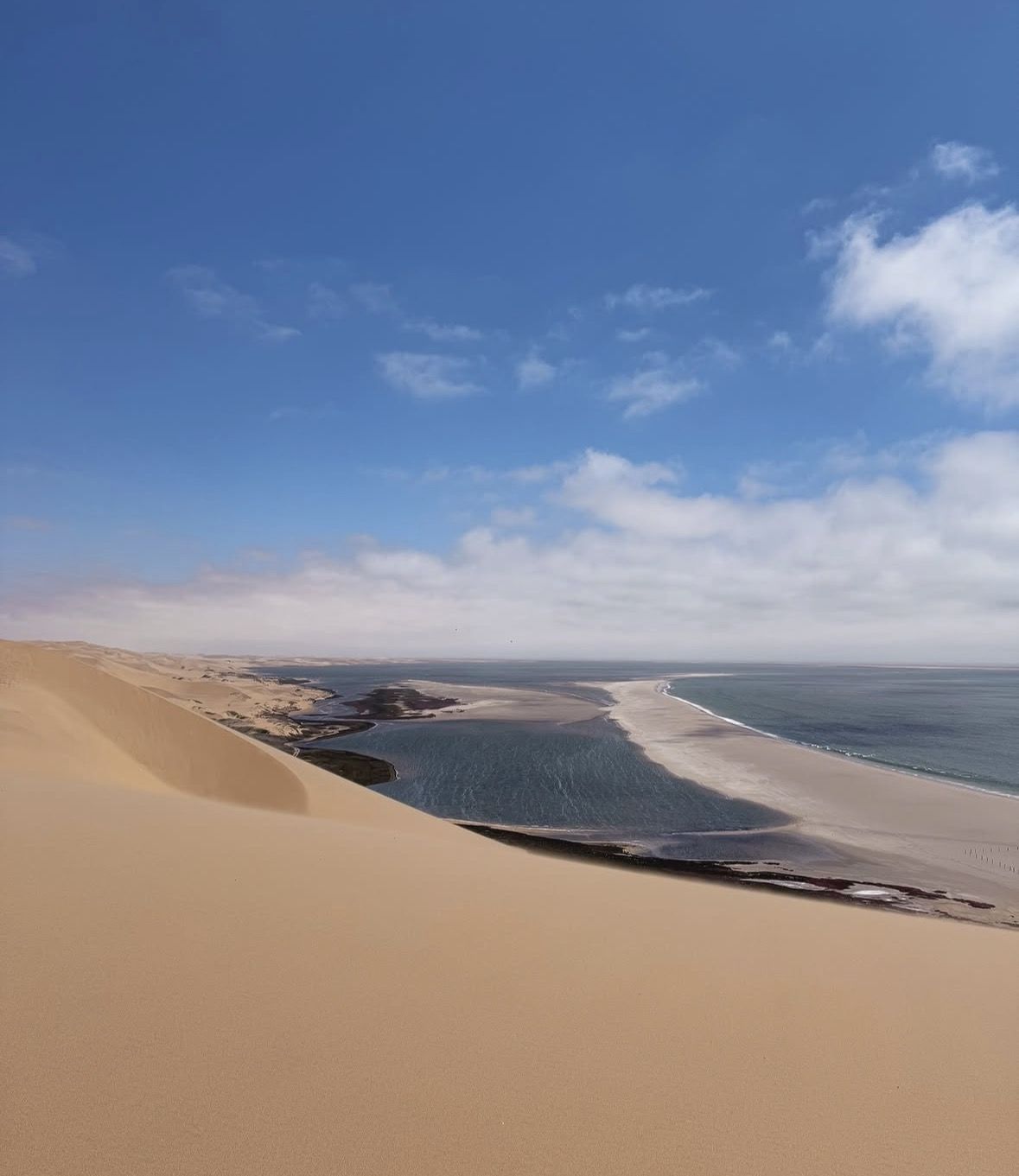
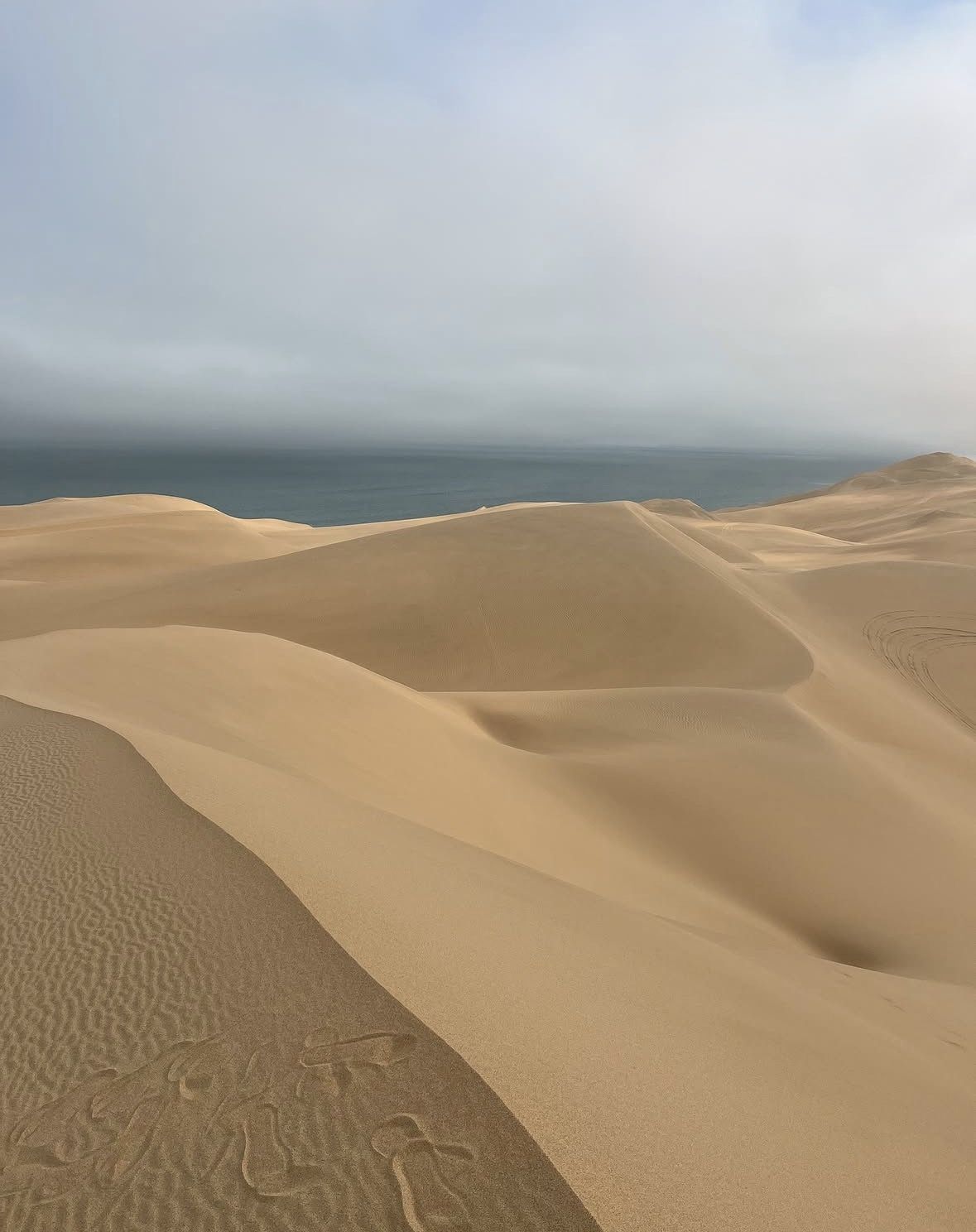
Today, Sandwich Harbour stands as one of Namibia's most iconic and photogenic destinations, beloved equally by wildlife enthusiasts and adventure travellers. The spectacle of colossal orange dunes — among the highest coastal dunes on Earth — plunging directly into the cold, fog-shrouded Atlantic remains unlike anything else on the continent. The lagoon itself shifts constantly in character: some days it teems with thousands of flamingos turning the shallows pink, while on others, Cape fur seals haul out along the water's edge and black-backed jackals patrol the tide line. The interplay of desert, ocean, and wetland creates an ecosystem of almost surreal biological productivity in the heart of one of the driest places on the planet.
Visiting Sandwich Harbour today means stepping into a landscape that has remained largely unchanged in character for centuries, yet rewards every visitor with something entirely new. Guided half-day and full-day tours depart from Walvis Bay, typically including a stop atop a towering dune for panoramic views that stretch from the lagoon's turquoise shallows to the infinite Namib interior. Whether you are an avid birder, a 4x4 enthusiast, a photographer chasing the golden hour, or simply someone who wants to stand at the edge of two worlds — the oldest desert on Earth and the open Atlantic — Sandwich Harbour delivers an experience that stays with you long after the sand has been shaken from your boots. This is Namibia at its most elemental, and it is waiting for you.
Ready to Experience It Yourself?
Sandwich Harbour is one of those rare places that exceeds every expectation — but because access depends on tides and licensed operators, planning ahead is essential to securing your spot. Browse our handpicked selection of guided 4x4 tours departing daily from Walvis Bay and find the perfect itinerary for your Namibian journey. Don't let the dunes shift without you — reserve your tour now and prepare for a landscape unlike anywhere else on Earth.
Book Your Tour Now